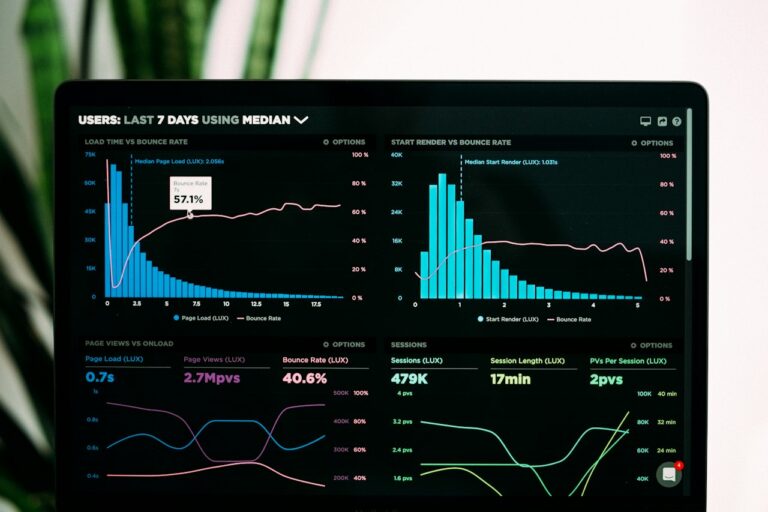
Business Intelligence Consulting: Services, Costs and How to Choose a Firm
Business intelligence consulting explained: what BI services include, what Power BI and consultants cost, and how to choose a firm your teams…
Read ArticleBusiness intelligence consulting explained: what BI services include, what Power BI and consultants cost, and how to choose a firm your teams…
Read ArticleData modernization services explained: what they include, the main approaches, what they cost, and how to pick a provider that proves the…
Read ArticleHow to hire AI developers: which AI roles you need, what each hiring model costs, how to vet for evaluation and security…
Read ArticleHow to hire Python developers: what each hiring model costs, how to vet candidates and companies, and when outsourcing makes sense, with…
Read ArticleRPA development services explained: what they include, when a bot is the right tool, what licenses and maintenance cost, and how to…
Read ArticleWhat managed data services include, when to outsource data management, the four provider types, and how to choose one, with real before-and-after…
Read ArticleWhat embedded specialists delivered at a global bank and an industrial company: reports cut from 2 hours to 10 minutes, data loads…
Read ArticleAI token costs keep rising even as prices fall. Why cutting staff to pay the bill backfires, and five practical ways to…
Read ArticleIDP vs OCR explained: OCR reads characters, IDP classifies, extracts, and validates fields. Which to buy, what to measure, and where OCR…
Read ArticlePower Automate vs Zapier vs Make vs n8n compared on pricing units, self-hosting, and RPA. Which automation tool wins for each situation,…
Read ArticleHow to connect Claude to internal systems with MCP without exposing customer data: gateway hosting, enterprise auth, field masking, and audit logging.
Read ArticleHyperautomation vs RPA explained: RPA automates one rule-based task, hyperautomation combines RPA, AI, process mining, and orchestration to finish a process.
Read ArticleTop AI consulting firms for 2026, ranked for enterprise buyers: Scadea, Accenture, Deloitte, IBM, McKinsey, BCG X, PwC, Capgemini, Cognizant, and EY.
Read ArticleAlternatives to big AI consulting firms, ranked: boutique consultancies, platform vendor teams, offshore IT majors, independents, and staff augmentation.
Read ArticleSupplier master data standardization best practices: one owner, ISO 8000 rules, TIN and bank checks, UNSPSC codes, and one golden record per…
Read ArticleAI for enterprise application modernization spans code migration, ERP and CRM agents, and replatforming. What the tooling does, and what the data…
Read ArticleAI for transportation operations spans uptime, routing, DOT compliance, and rail inspection. Here is how to sequence them and which regulators apply.
Read ArticleAI for manufacturing operations covers four domains: uptime, quality inspection, demand forecasting, and OT security. Here is how to sequence them.
Read ArticleEnterprise RAG architecture adds four layers consumer RAG skips: permission-aware retrieval, multimodal ingestion, groundedness scoring, audit compliance.
Read ArticleAgentic AI for enterprise works when three layers run together: architecture patterns, agent boundaries, and governance. See how to deploy each layer.
Read ArticleAn enterprise AI governance framework maps controls to regulations across the AI lifecycle. Here's how to structure one that scales to agentic…
Read ArticleA modern data platform for enterprise AI unifies ingestion, storage, transformation, serving, and governance for AI-ready data.
Read ArticleEnterprise hyperautomation combines RPA, AI, process mining, and low-code platforms to automate end-to-end processes at scale. Learn the DAOG framework.
Read ArticleRetrieval-augmented generation for enterprise AI grounds LLMs in your knowledge base. How RAG works, where it fails, and what production requires.
Read ArticleMost AI pilots fail before production. Here's what enterprise AI implementation actually requires: data readiness, MLOps, governance, and org alignment.
Read ArticleThis guide focuses on what security, IT, and risk teams actually need to sign off: permissions, approvals, logging, and rollout controls.
Read ArticleThe future of intelligence will not be powered by computing alone - it will emerge from the fusion of quantum technologies, AI, and real-time global connectivity.…
Read ArticleAI in regulated environments faces a specific challenge. The technology works. Pilots succeed. Proofs of concept look promising. But then adoption stalls.…
Read ArticleThis guide explains why integration is the foundation of RegTech, what “good” integration looks like in regulated environments, and how financial institutions…
Read ArticleiPaaS for regulated enterprises centralizes integration, audit trails, and governance across DORA, SOX, GDPR, and MiFID II. Learn how it works.
Read ArticleThis guide explains what regulatory automation really means, where it creates value, how it fits with AI-driven risk monitoring and explainable AI,…
Read ArticleThis guide explains what explainable AI actually means in practice, why regulators care, how it fits within risk and compliance frameworks, and…
Read ArticleAI-driven risk monitoring gives financial institutions earlier signals, audit-ready evidence, and continuous oversight under Basel III and SR 11-7.
Read ArticleA redesign is a chance to modernize your brand, improve conversions and fix technical problems, but it’s also one of the most…
Read ArticleChoosing a game engine is one of the earliest and most important decisions in any game, simulation or interactive 3D project. It…
Read Article