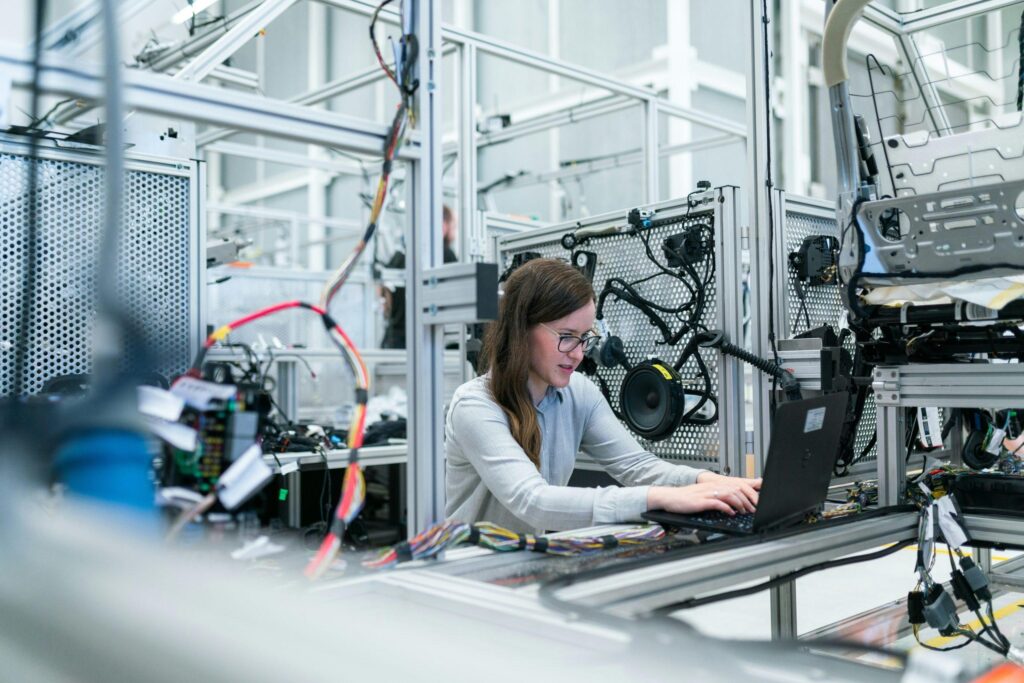
FROM: Manual approvals and disconnected workflows. TO: Autonomous processes and AI-assisted quality control.
Replacing Paper Trails With Intelligent Flow
A precision components manufacturer relied on paper-based approvals and outdated workflow tools to move jobs through production. Every shift involved chasing signatures, re-entering the same data across multiple systems, and resolving errors caused by manual handoffs between production and quality teams. Quality checks happened late in the process, so deviations were often caught only after units reached final inspection, well past the point where a fix was cheap or easy. The manufacturer wanted a smoother flow through the shop floor without disrupting the production teams who depended on the existing process every day.
What We Found
- Approval steps were handled through a patchwork of sticky notes, emails, and spreadsheets, with no single source of truth.
- Quality checks weren’t tied to upstream production data, so problems surfaced late instead of at the point they occurred.
- Rework levels were higher than they needed to be, driven by deviations caught too far downstream.
- Communication between the production and quality teams lagged, adding delay to every handoff.
- The environment worked, but only through constant manual effort holding it together.
What We Did
Scadea’s team mapped the full approval and quality workflow from job start to final inspection, then rebuilt it around low-code automation designed to mirror how the shop floor actually operated rather than forcing teams to adapt to a rigid new system. Machine data was piped directly into the quality process for the first time, closing the gap between what was happening on the production line and what the quality team could see.
- Automated approval paths with low-code workflows that mirrored actual shop-floor behavior instead of a theoretical process.
- Integrated machine data directly into quality systems so checks could run against real production signals.
- Added AI models to flag deviations earlier in the process, before units reached final inspection.
- Gave supervisors a simple dashboard showing job status, open issues, and next steps at a glance.
Work began to move without friction, and without paper.
Outcome & Takeaway
- Approvals happened instantly instead of waiting on signatures and manual routing.
- Deviations were caught earlier in the process, reducing rework and scrap.
- Supervisors gained real-time visibility into job status without chasing updates across systems.
The manufacturer now runs a shop floor where quality control keeps pace with production instead of trailing behind it, with the automation in place to extend to additional production lines as the business grows.